The Geometric Intrepretation of the Derivative as a Slope
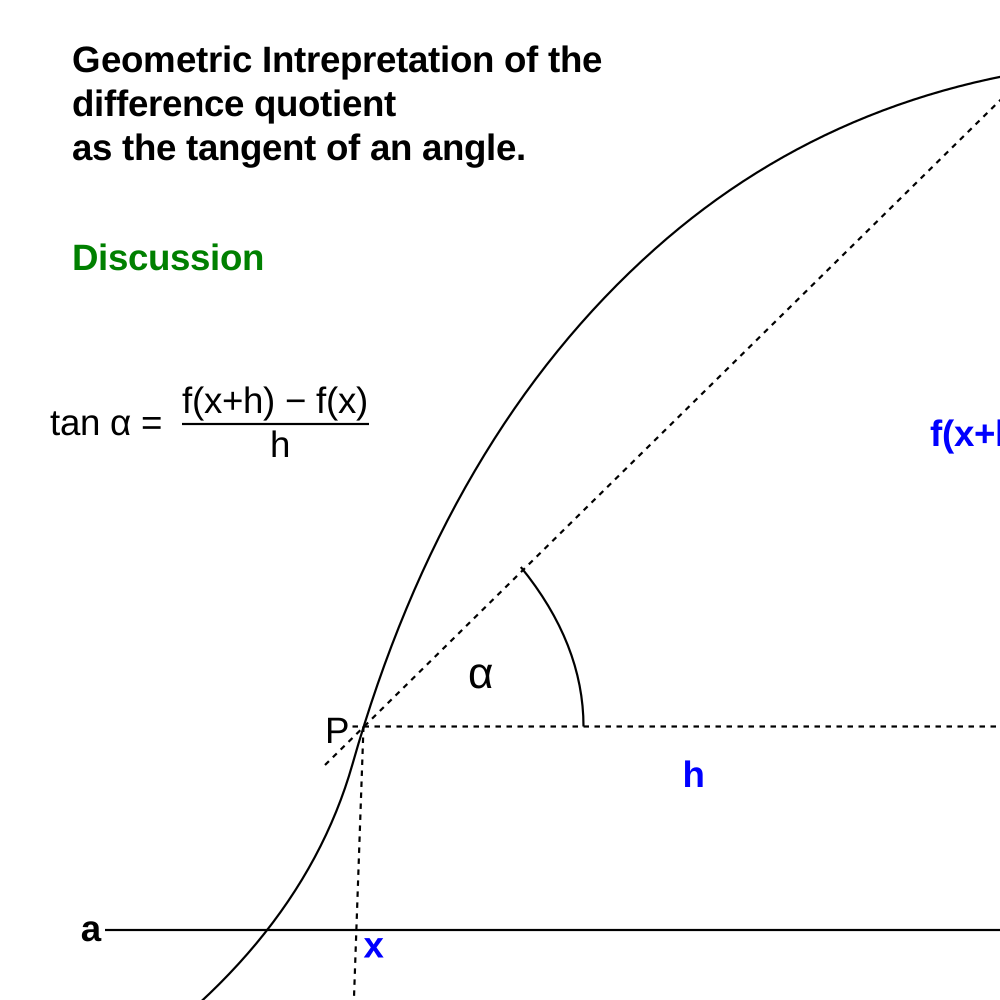
A portion of the graph of the function f is shown in the figure.
Two of its points P and Q are shown with the respective coordinates (x,f(x)) and (x+h,f(x+h)).
Consider the ⊿ with hypotenuse PQ.
Its altitude f(x+h) - f(x) represents the difference in the ordinates of the two points P and Q.
∴ the Difference Quotient represents the trigonometric tangent of the angle α.
f(x+h) - f(x)
—————
h
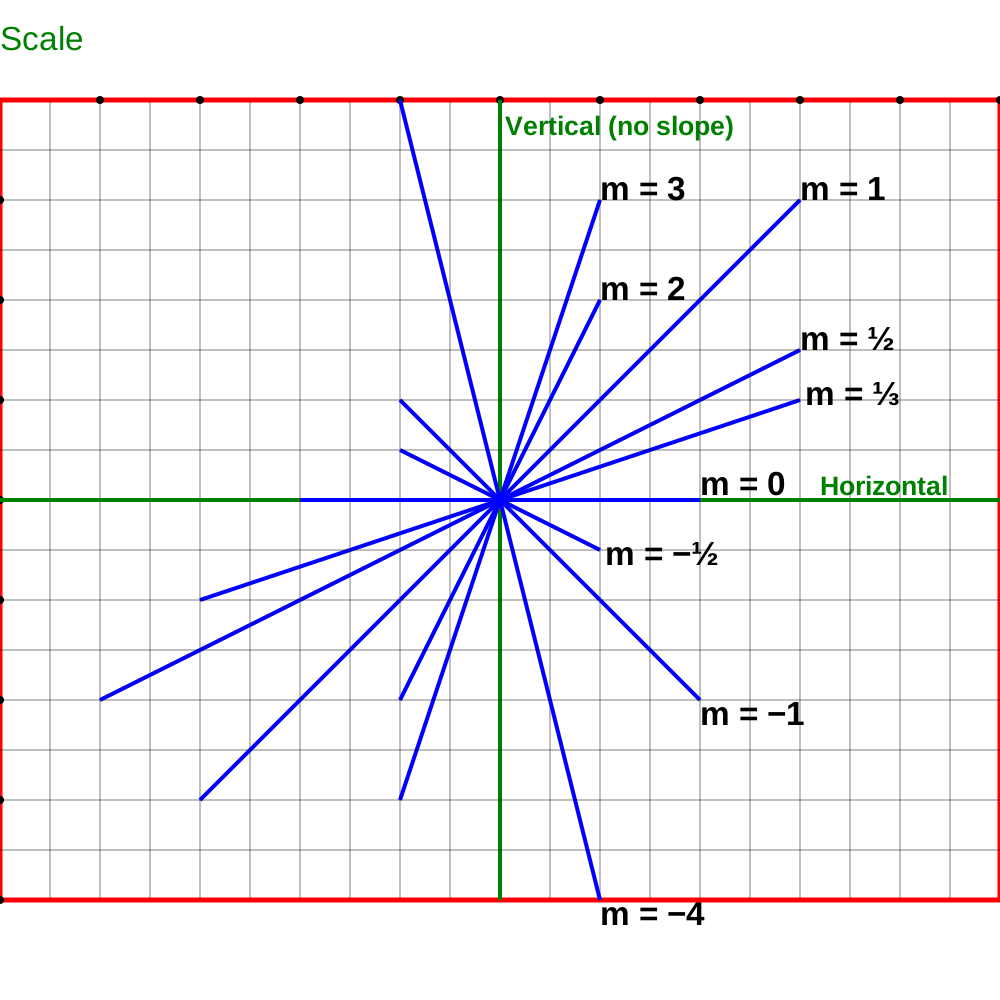
The real number tanα is called the slope of the line from P to Qand it provides a way of measuring the "steepness" of this line.Lines of various slopes
The Geometric Intrepretation of the Sign of the Derivative
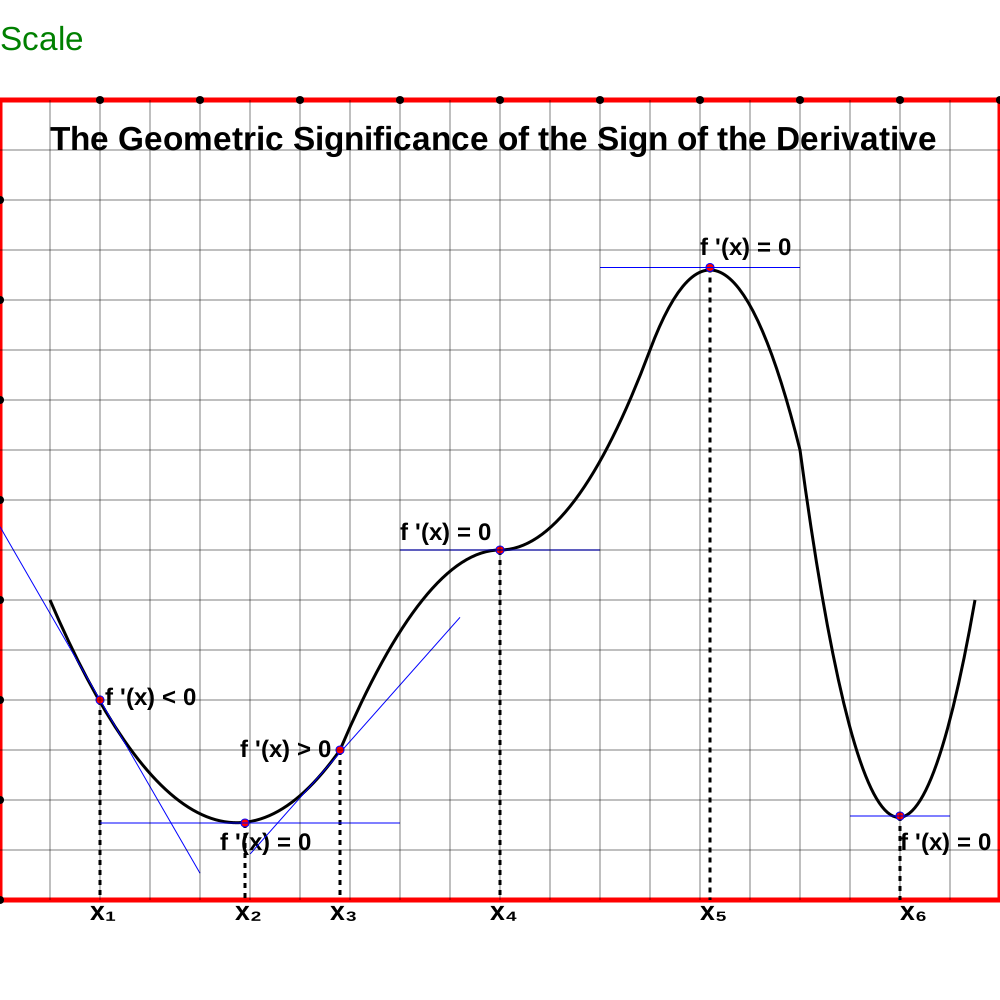
If x is a point in an interval where the derivative exists, then- If x is a point in an open interval where the derivative is positive
then the graph of the function is rising in the immediate vicinity of x
as x moves from left to right. This occurs at x₃. - A negative derivative in an interval means that the graph is falling as can be seen at x₁.
- A zero derivative indicates a horizontal tangent line
and a maximum or minimum occurs at such points.(x₂ , x₅ and x₆).
Points like x₂ , x₅ and x₆ where f has a maximum or minimum occur among the roots of the equation
f '(x) = 0
It is important to take note that f '(x) may also be zero at points where there is no maximum or minimum,
such as x₄ and at this particular point the tangent line crosses the graph.